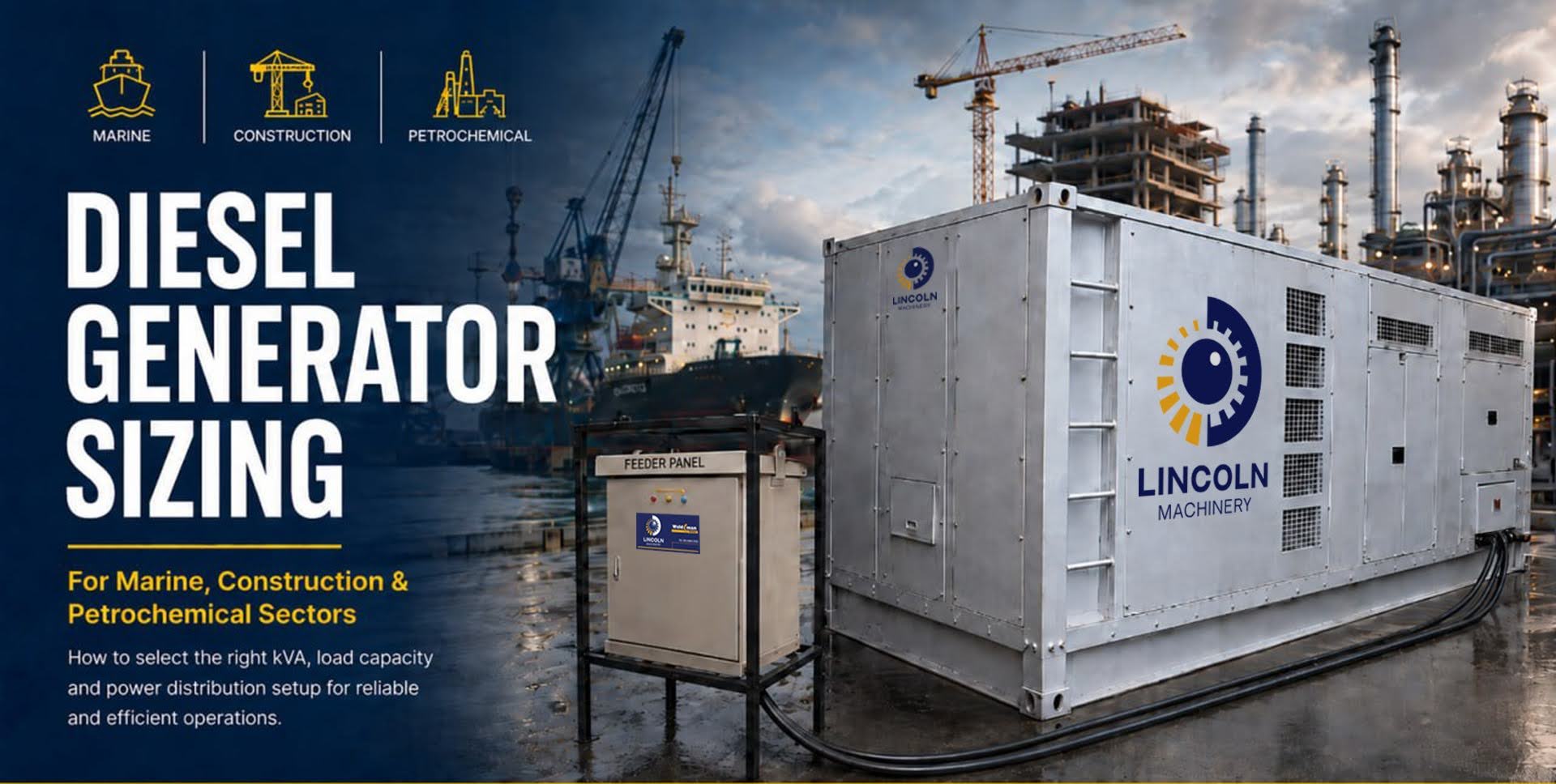

Diesel Generator Sizing: Marine, Construction & Oil and Gas
Getting a diesel generator’s size wrong causes two costly problems. An undersized unit overloads under peak demand, drops power when motors and pumps start up, and can damage the equipment it runs. An oversized unit runs under load for most of its life, causing carbon buildup, wasted fuel, and a shorter lifespan.
How to size a generator starts with the site’s actual demands: the loads involved (motors, pumps, welding equipment), voltage and frequency, and how those loads behave on startup, not a generic estimate. What follows covers the technical factors behind the right specification for construction, marine, and oil & gas projects.
Prime Power vs. Standby Power: Understanding the Difference
Prime power and standby power describe two different jobs, and treating them as interchangeable is where sizing mistakes start.
A prime power generator runs continuously, at a variable load, for as long as a project needs it, with no grid or mains supply as backup. That covers most standalone gensets on construction and marine sites without mains power.
A standby generator is rated only for emergency backup during a temporary outage, at a fixed load, for limited hours. Running a standby-rated unit as a prime source pushes the engine past its design limits, risking failure exactly when a site needs power most.
Calculating Total Power Requirements (kW and kVA)
Real power (kW) is what a load consumes; apparent power (kVA) adds the reactive component that motors and pumps draw. The two relate through the power factor: kW equals power factor times kVA, typically 0.8 to 1.0 on industrial sites.
Motors and pumps also draw a starting surge above their running current, and a genset sized only for steady-state load can stall under that surge.
A straightforward sizing method applies three steps, using a 50 kW load as an example:
Two straightforward methods reach the same figure, depending on what data is on hand:
- If you know the load in kW: divide by the power factor to get kVA, then add a 20% margin. A 50 kW load at 0.8 PF works out to 62.5 kVA, rounding up to a 75 kVA generator.
- If you know the current in amps: kVA equals 1.732 × voltage × amps ÷ 1000, then add the same margin. At 400V and 90A, that also lands on roughly 75 kVA.
Rounding down to save on rental cost is the most common sizing mistake procurement teams make.
Considering Environmental Factors and Physical Footprint
Singapore’s heat and humidity affect how much continuous output a diesel generator can deliver. Manufacturer ratings are set at a reference temperature, and sustained tropical heat can push output below the nameplate figure, so it’s worth confirming derated output with the supplier rather than sizing off the datasheet alone.
Where the generator sits matters too. Most gensets run outdoors, where exhaust and heat disperse naturally. Enclosed deployments, such as engine rooms on marine vessels, need flexible air ducting (8 to 24 inches in diameter) to extract exhaust and manage heat buildup.
Footprint scales with capacity too: a 5 kVA unit measures roughly 720 x 480 x 578 mm against 6000 x 2400 x 2600 mm for a 1000 kVA unit. On a congested site or a vessel with limited deck space, that difference decides what fits, so a supplier should assess the layout beforehand.
Evaluating the Impact of Prolonged Operations on Fuel Efficiency
Generator sizing affects fuel consumption and mechanical wear over a project’s life, not just whether the unit handles peak load. Running near 80% of rated capacity is generally the sweet spot for fuel efficiency and engine longevity.
Both extremes carry a cost: overloading strains the engine, while running well under capacity causes incomplete combustion, known as wet stacking, where unburned fuel and carbon build up in the exhaust and cut output over time.
Total cost of ownership is a more useful comparison than the upfront price: a correctly sized genset burns less diesel, needs fewer unscheduled repairs, and holds its output for the full project, while the lowest quote often costs more once fuel and maintenance are counted.
Navigating Singapore’s Environmental Regulations for Generators
Off-road diesel engines imported, or manufactured in, Singapore on or after 1 July 2012 must meet National Environment Agency emission standards (EU Stage II, US Tier II, or Japan Tier I), with compliant units displaying a red number plate as proof. Older equipment imported before that date isn’t required to carry an NEA certificate and remains legal for site use, so not every unit in a rental fleet will have one. Correctly sized, well-maintained equipment supports this compliance, since an engine running within its intended load range burns cleaner than one that’s overloaded or underloaded.
Noise control matters just as much near residential areas or sites with fixed working hours. Lincoln Machinery’s temporary generator sets are supplied sound-proofed as standard, in a canopy enclosure rather than an open frame, keeping deployment straightforward where noise restrictions apply. Open-frame units suit remote or industrial zones where noise isn’t a constraint.
Source Appropriate Diesel Generators with Lincoln Machinery
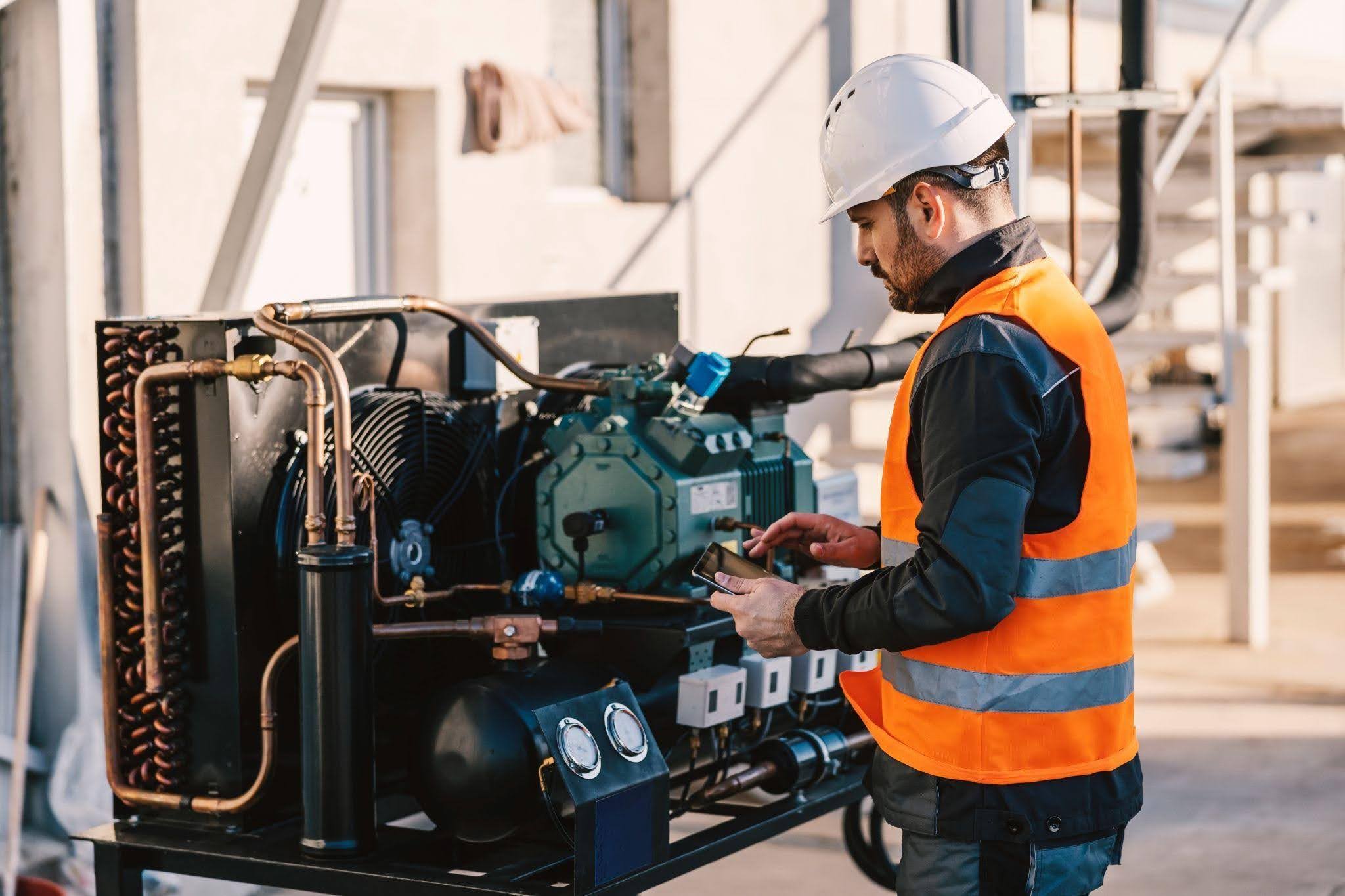 Lincoln Machinery’s diesel generator singapore rental fleet covers a wide capacity range, with configurations to match different site setups:
- Capacity range: 5 kVA to 1000 kVA, with paralleling available up to 16,000 kVA for large-scale sites.
- Phase configuration: single-phase for units at 20 kVA and below, three-phase for larger loads.
- Synchronisation-ready units: 500 kVA, 650 kVA, and 1000 kVA generators come fitted with synchronisation control as standard.We also have plans to implement synchronisation control for generators from 20 kVA to 350 kVA in the near future, further expanding our range of synchronisation-ready solutions.
- BESS-compatible: Generator control panels can be customised to support seamless communication and automated control integration with customers’ on-site Battery Energy Storage Systems (BESS).
- Services: rental, sales, servicing, and repair, so a unit needing an overhaul can be swapped for a loaner without stalling work.
Depending on project requirements, we partner with Grade 9 Licensed Electrical Worker (LEW) services for installations up to 1000 kVA and above.
Get in touch with Lincoln Machinery to confirm the right generator specification for your next construction, marine, or oil & gas project before it ships to site.